I'll admit it: I love a good to-do list. Not the making of it (anyone can write "fix the garage trim" on a sticky note and look at it for two years). I love the crossing off. That line through the last item is the best part of my job, and it's the reason my tagline is Making your TO-DO list a DONE list.
This week a homeowner in Broomfield, CO handed me a list with three items that had been hanging around for a while. None of them is a weekend-ruiner on its own. Together, they're the kind of small exterior repairs that quietly get worse every season they're ignored. Here's how each one came off the list.
✅ To-Do #1: Replace Rotted Garage Door Trim and Weatherstrip
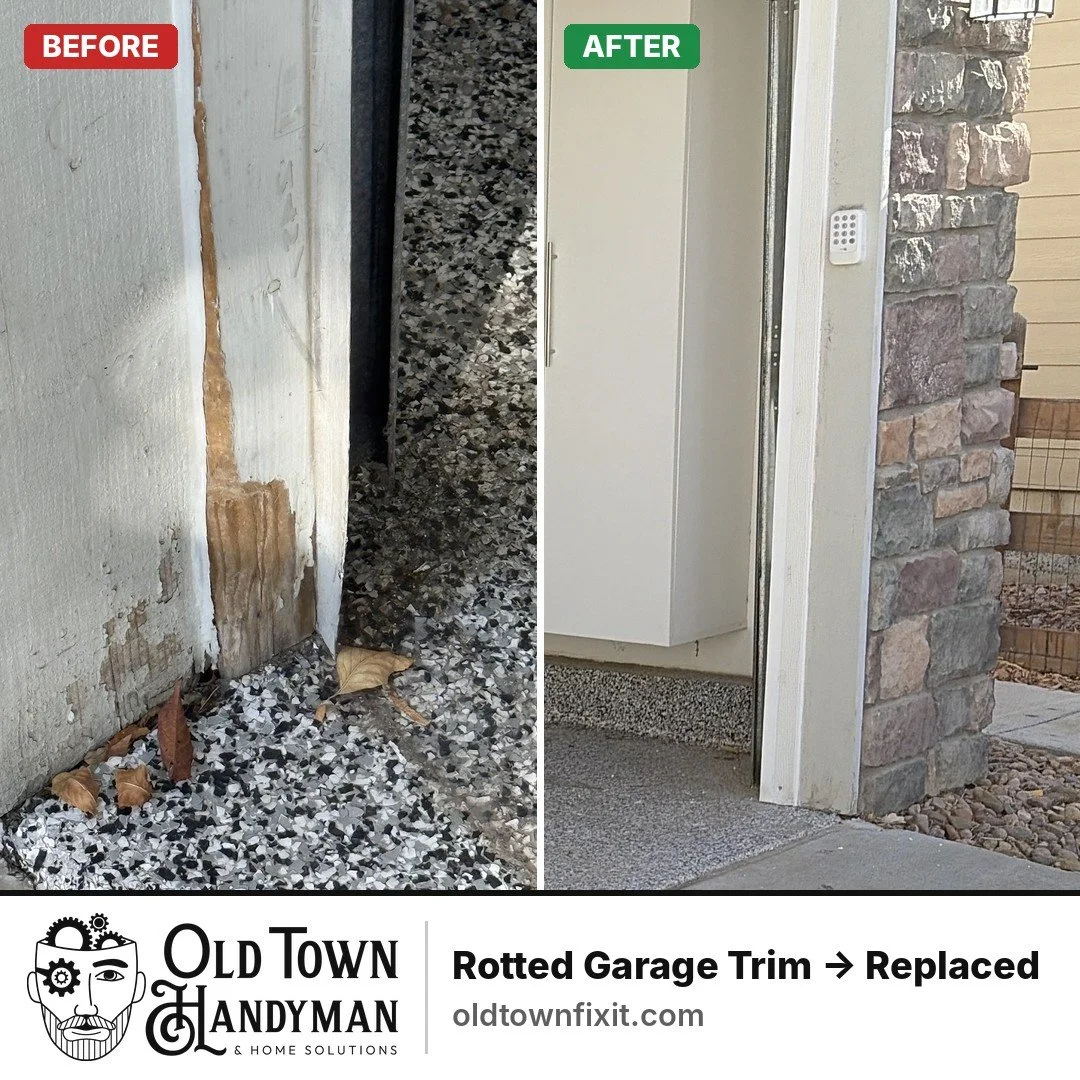
The problem: The bottom of the garage door jamb had rotted through. In the before photo you can see the paint peeled away and the wood underneath soft, split, and gray from repeated moisture. The weatherstrip running up the jamb was stained, brittle, and no longer sealing against the door.
This is one of the most common exterior repairs I see across Boulder County. Snow melts, water sits at the bottom of the jamb where the door meets the slab, and the wood wicks it up year after year. Once rot starts, it spreads up the jamb and into the framing behind it, and a gap in the weatherstrip lets in cold air, water, leaves, and the occasional mouse.
The fix:
Removed the rotted trim and the old weatherstrip on both sides and the top of the garage opening
Installed new trim and new garage door weatherstrip so the door seals tight along the full perimeter
Caulked and finished the new trim so the jamb is protected against the next round of Colorado freeze-thaw
The result: A clean, tight seal around the whole door, and no more soft wood at the base waiting to spread.
✅ To-Do #2: Remove the Satellite Dish and Seal the Siding
The problem: An old satellite dish was still lag-bolted to the lap siding next to a window, with a stabilizer arm screwed into the window trim. Like a lot of homeowners who've switched to streaming, my client hadn't used it in years. It was a bulky eyesore, and every lag screw was a hole through the siding.
The fix:
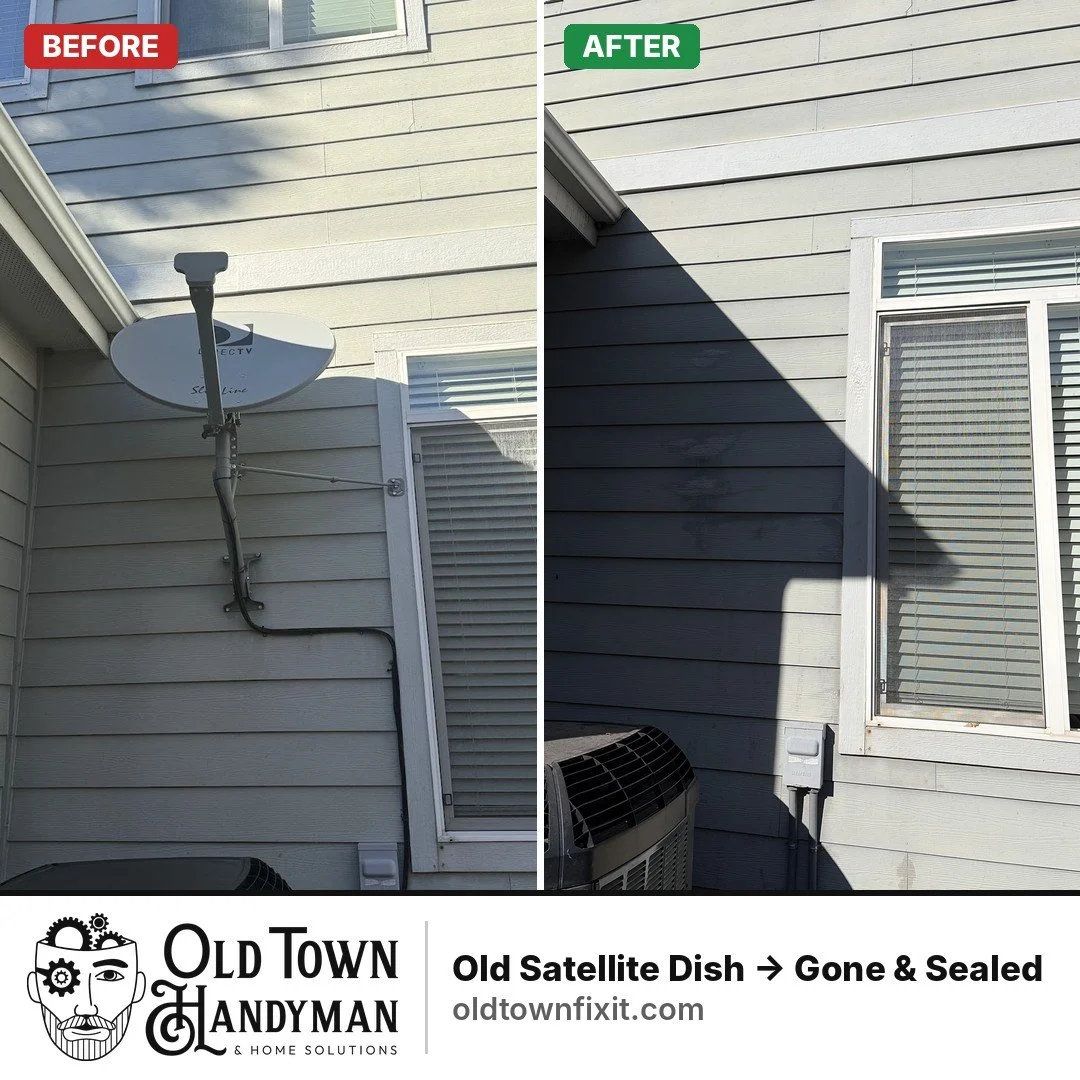
Took down the dish, the mast, the stabilizer arm, and the coax cable
Sealed every lag screw hole in the siding and window trim with exterior-grade sealant to keep water out of the wall cavity
Why it matters: Leaving abandoned screw holes open is an open invitation for water to get behind your siding, and that is where expensive problems start. If you've got an unused dish on your house, taking it down properly takes less than an hour, and the sealing step is the part that counts.
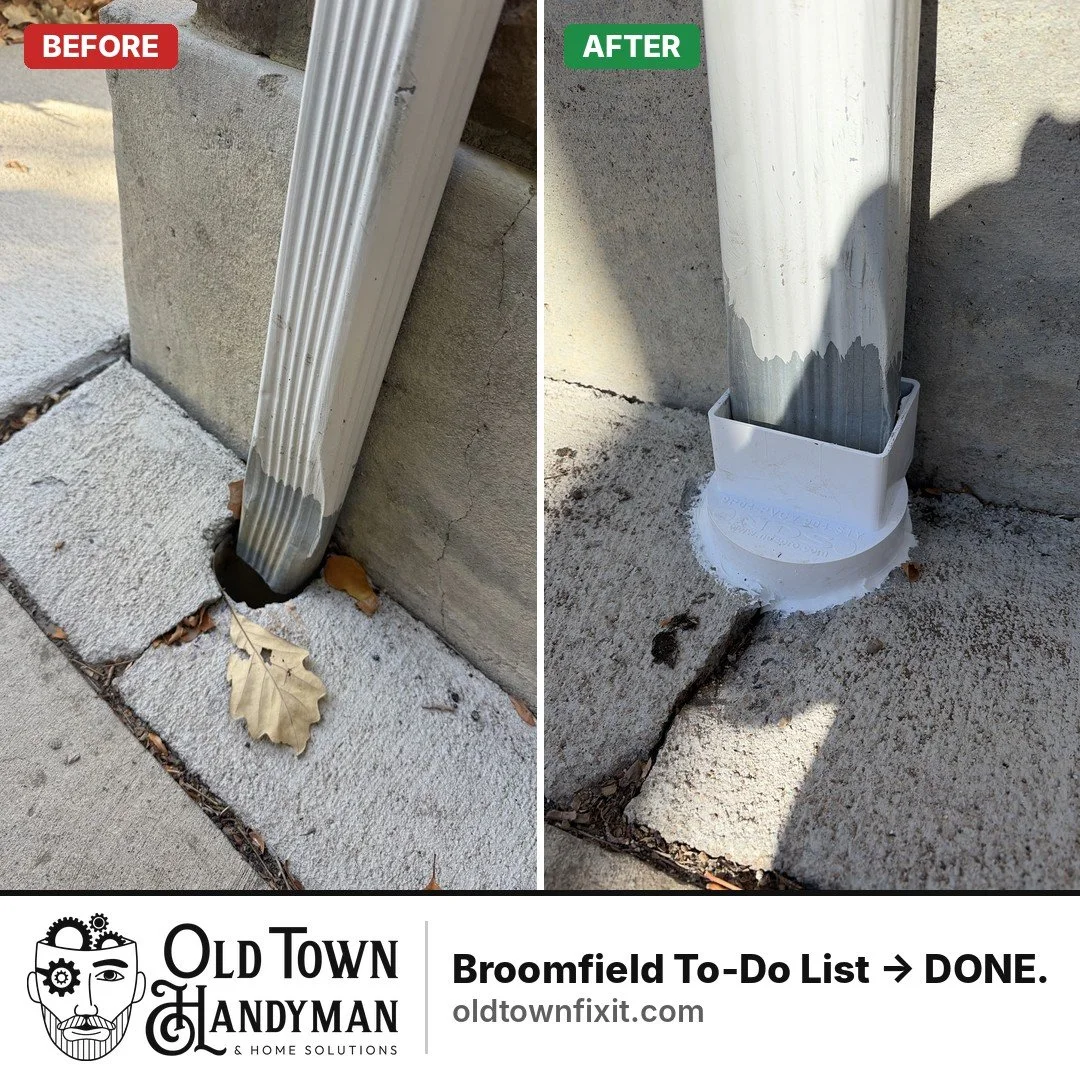
✅ To-Do #3: Install a PVC Downspout Adapter to Stop Leaf Clogs
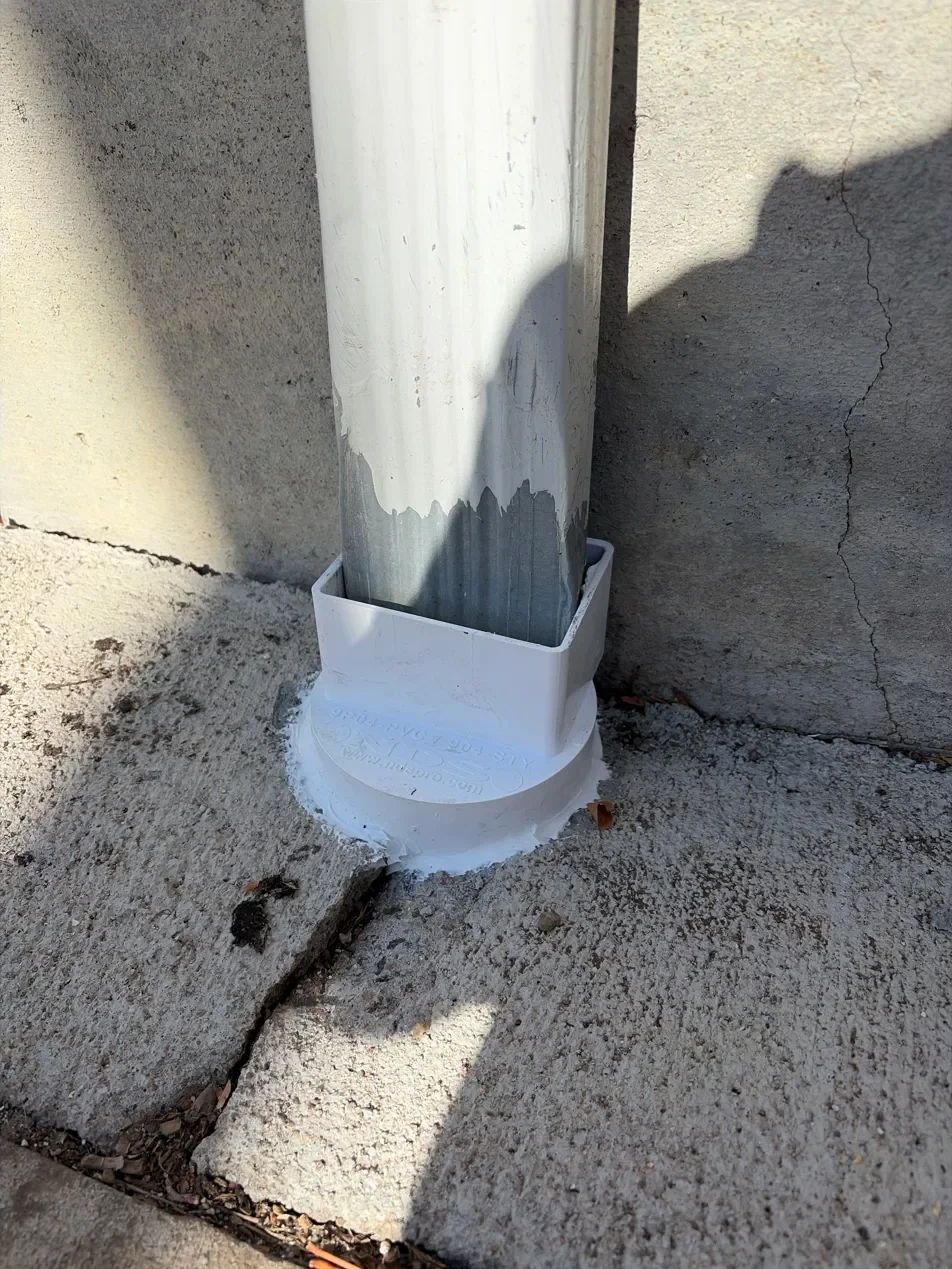
The problem: This downspout dropped straight into an opening in the concrete that feeds an underground drain. The concrete around the opening was broken and the downspout just sat loosely in the hole. That left an open gap all the way around, so leaves blew into the drain from ground level and clogged it, sending water back toward the foundation.
The fix:
Installed an NDS PVC downspout adapter, which transitions the rectangular downspout into the round drain pipe
Sealed the adapter into the concrete opening so there's no gap for leaves and debris to blow into
One honest note: the adapter seals the opening at ground level. It doesn't filter leaves that come down through the gutter itself. If your downspout drains underground and your roof sheds a lot of leaves, pairing this with gutter guards or a leaf strainer is the complete fix. I'm happy to look at both.
The Best Part: Crossing It All Off
Three small exterior repairs, one visit, one Broomfield homeowner with a shorter list. That's what I do: the trim you've been meaning to replace, the thing bolted to your house you don't use anymore, the drain that clogs every fall.
Have a to-do list of your own? I serve Lafayette, Louisville, Superior, Broomfield, Erie, Boulder, and Longmont. Send me your list and I'll get to crossing things off.
👉 Book online or request an estimate
Old Town Handyman & Home Solutions: Making your TO-DO list a DONE list.