Too Hot to Handle: A Solar Exhaust Fan Gives This Shed a Cool Head
A small shed in the Colorado sun is basically a toaster oven with a door. Closed up tight, no airflow, shingles soaking up rays all afternoon. It's a great place to store things right up until it starts cooking them.
That's exactly the call I got from a Boulder County homeowner. Their shed was getting so hot during the day that it was damaging the things stored inside. They didn't want a new shed. They wanted the one they had to stop baking their stuff.
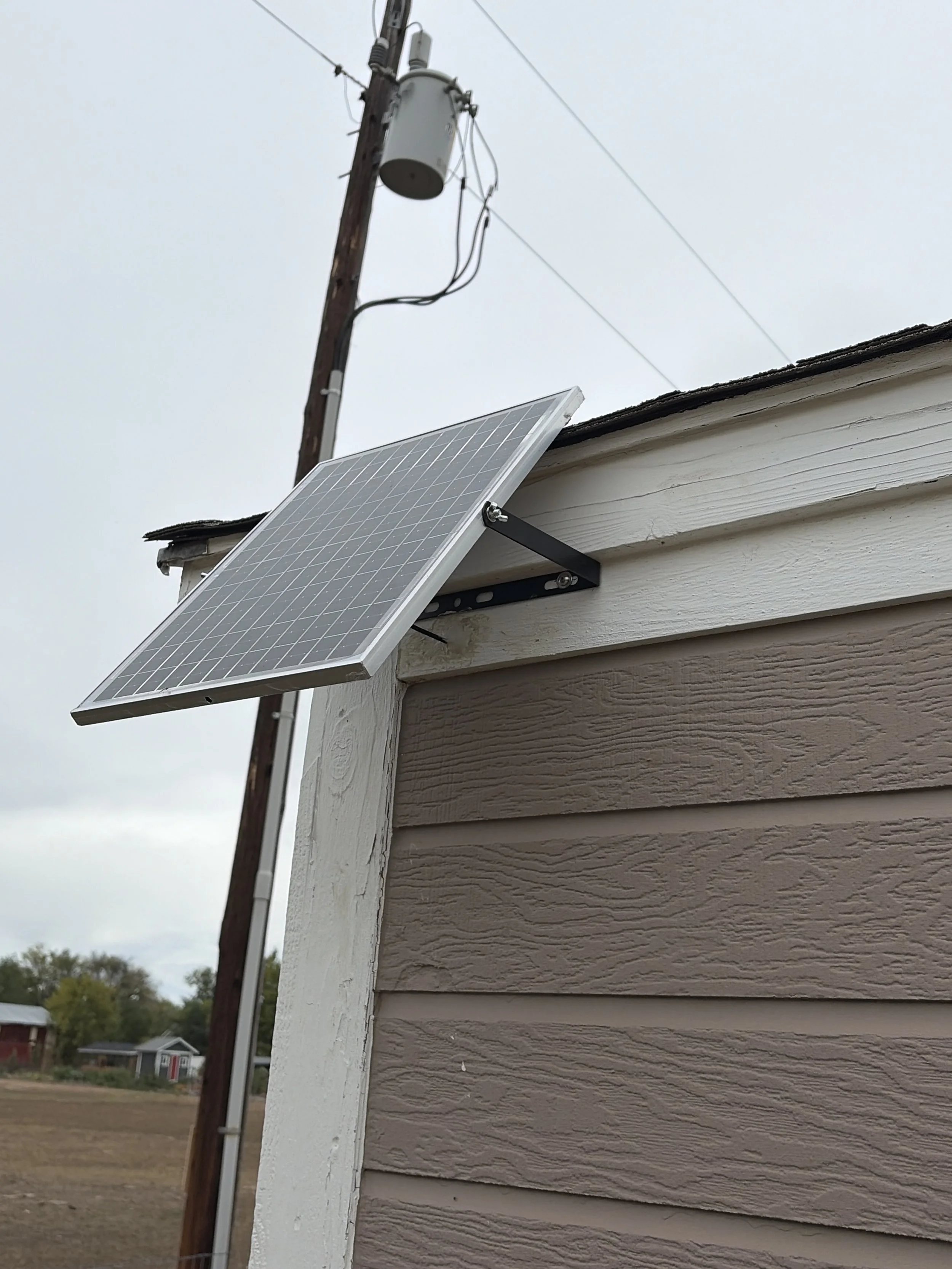
Solar panel on adjustable bracket mounted to shed fascia to power a solar exhaust fan in Boulder County, CO
The fix: a solar-powered shed exhaust fan with a thermostat and battery backup. No wiring run from the house, no trenching across the yard, and no monthly electric bill.
Why Sheds Overheat in Colorado
Sheds in Lafayette, Louisville, Superior, Broomfield, Erie, and Boulder get hit with a tough combination:
Intense high-altitude sun. Our UV and solar load are no joke, even on mild days.
Small, sealed spaces. Less air volume means temperatures climb fast.
No ventilation. Many prefab and older sheds have no vents at all, so hot air has nowhere to go.
Heat rises and stays. Without an exit point up high, the hottest air parks right in the peak of the roof.
On a sunny afternoon, an unvented shed can run far hotter than the air outside it.
What Heat Does to the Things in Your Shed
If you're storing any of these, a hot shed is costing you money:
Paint, stain, caulk, and adhesives (can separate, skin over, or spoil)
Batteries and battery-powered tools
Plastic bins, vinyl, and rubber items (warping and brittleness)
Electronics and chargers
Seeds, fertilizers, and garden chemicals
Candles, holiday decor, and anything with wax or glue
The damage is slow and quiet. You usually find out when you open a can of paint and it's ruined, or pull out a bin that's warped out of shape.
The Fix: A Solar-Powered Shed Exhaust Fan
Here's what I installed:
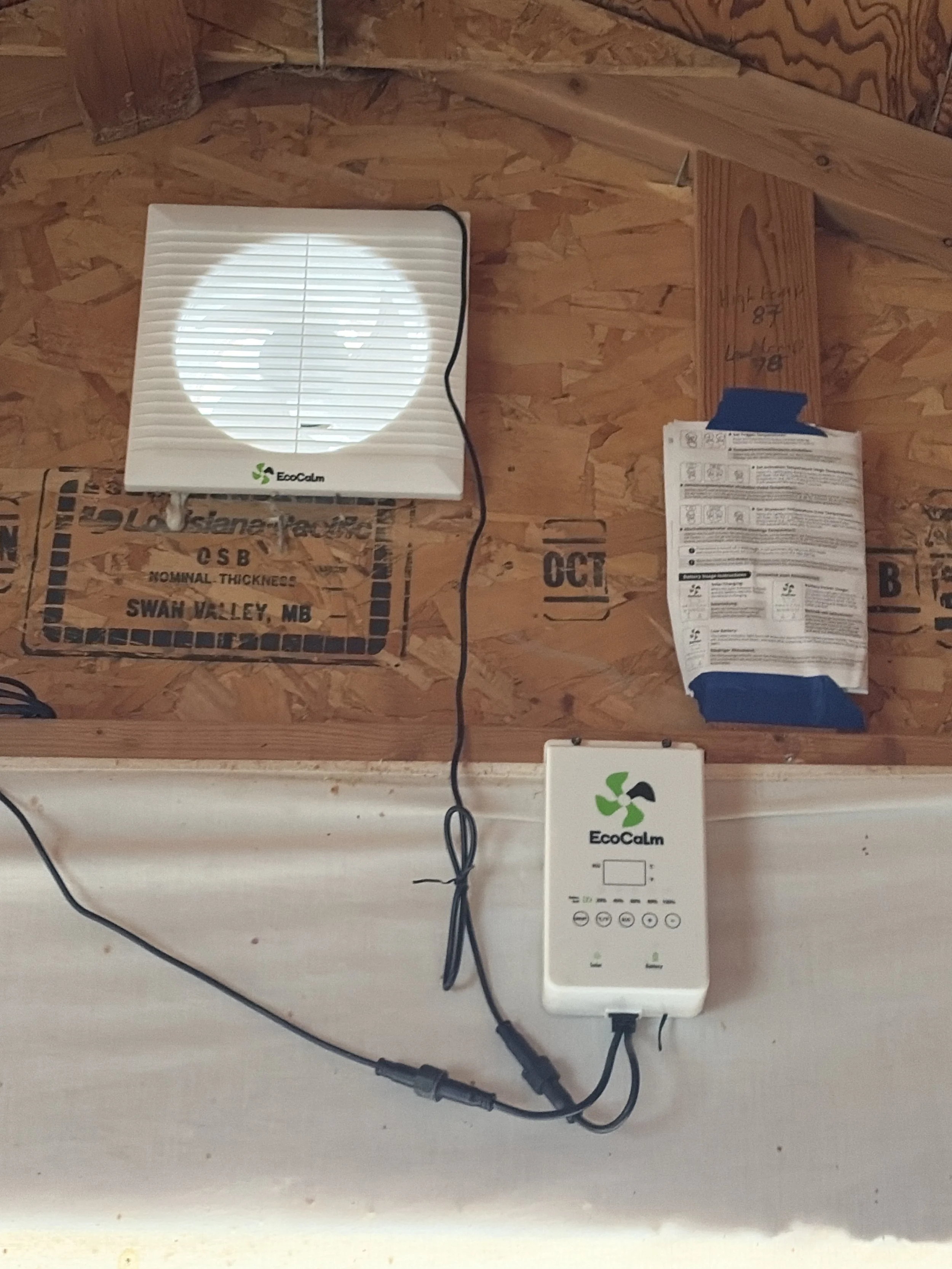
Interior solar shed exhaust fan with thermostat controller and battery backup installed by a Lafayette, CO handyman
1. A solar panel at the roofline. I mounted a compact solar panel on an adjustable bracket at the fascia, angled to catch the sun. And yes, there's a utility pole right next to the shed. Running a dedicated electrical circuit out to a small shed is often far more work and cost than the problem deserves. The sun was the easier power source.
2. An exhaust fan high in the gable. Heat collects at the peak, so that's where the fan goes. It pulls the hottest air out first.
3. A thermostat controller with battery backup. This is the brains of the system. The fan kicks on when the shed hits a set trigger temperature and shuts off once it cools down. The battery keeps it running when clouds roll through or the sun drops in the late afternoon, which is often when a shed is at its hottest.
4. A louvered exterior vent hood. On the outside, a weather-resistant vent hood with flaps that open when the fan runs and close when it's off. That keeps out rain, snow, and critters.
I routed and secured the cabling, sealed the exterior penetration against the siding, and left the controller's instruction sheet posted next to the unit so the homeowner can adjust the trigger temperature whenever they want.
A Quick Note on Airflow
An exhaust fan only works as well as the fresh air coming in to replace what it pushes out. If a shed has no intake vent at all, the fan struggles. When I size a shed ventilation job, I always check for a path for cooler air to come in low, so the fan can push hot air out high. That's the difference between a fan that looks nice and a fan that actually cools.
Is a Solar Shed Fan Right for You?
It's worth a look if:
You dread opening the shed on a summer afternoon
Stored items are warping, melting, spoiling, or smelling off
Your shed has no electrical power
You want a set-it-and-forget-it solution with no operating cost
Why Install It Now?
Fall is the perfect time. Your shed isn't an oven right now, it's easier to work in, and you'll be protected before next summer's first heat wave instead of scrambling after something's already ruined.
Let's Cool Your Shed Down
I'm Jeremy, owner of Old Town Handyman & Home Solutions, a one-man handyman business based right here in Old Town Lafayette. I serve Lafayette, Louisville, Superior, Broomfield, Erie, and Boulder.
If your shed, garage, or workshop is running hot, book a visit here and I'll take a look.
Old Town Handyman & Home Solutions — Making your TO-DO list a DONE list.