Failed Caulk, Rotted Trim: How a Shrinking Caulk Line Destroyed This Window Trim (and How I Fixed It)
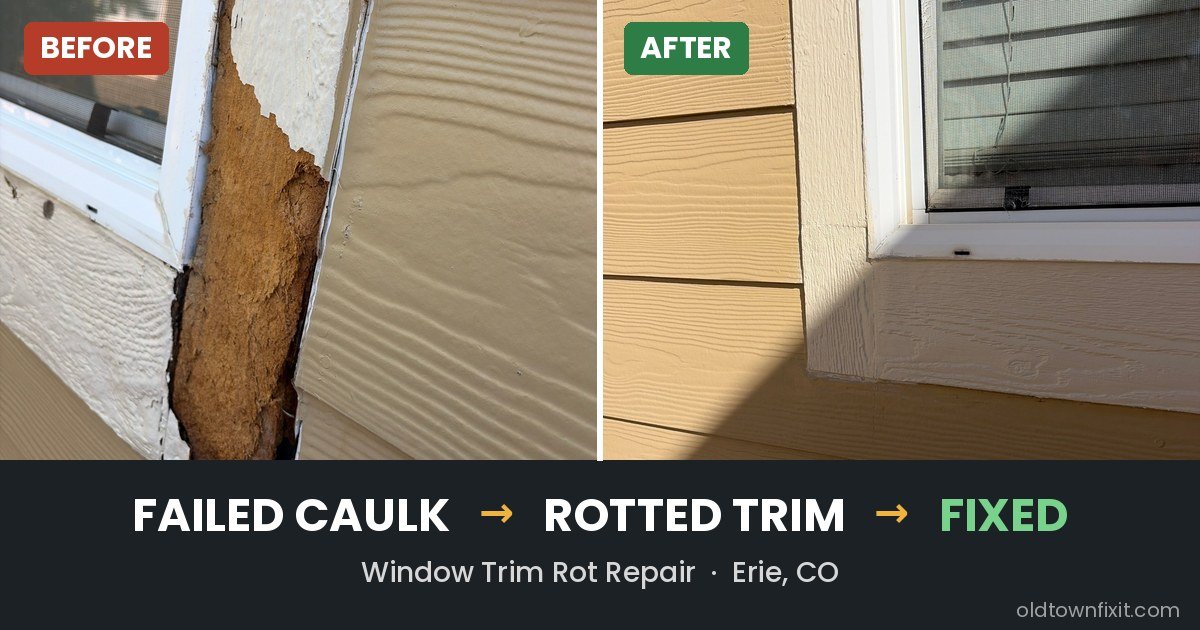
Before and after window trim rot repair: fiberboard trim rotted by failed caulk replaced with sealed, painted wood trim in Erie, CO
Some repairs announce themselves loudly — a dripping faucet, a door that won't latch. Window trim rot is the opposite. It starts with something tiny: a caulk line that shrinks a little more each summer until it pulls away and leaves a gap you'd never notice from the driveway. Then water does the rest.
That's exactly what I found on this window trim rot repair in Erie, CO. Here's what went wrong, why it happens on so many Front Range homes, and how I fixed it so it holds up through another Colorado winter.
The Root Cause: A Caulk Line That Shrank and Failed
On every window I repaired here, the story was the same. The caulk line between the trim and the window frame had shrunk and separated. Our sun, low humidity, and big temperature swings are hard on caulk. Over time it dries out, shrinks, and cracks, and that thin gap becomes a channel that funnels rain and snowmelt straight into the trim.
Caulk is cheap. What happens behind it when it fails is not.
The Damage: Fiberboard Trim That Drank Too Much Water
This home's exterior window trim was fiberboard (sometimes called hardboard or engineered wood trim). It's common on newer homes because it's affordable, consistent, and takes paint well. Its weakness? Water.
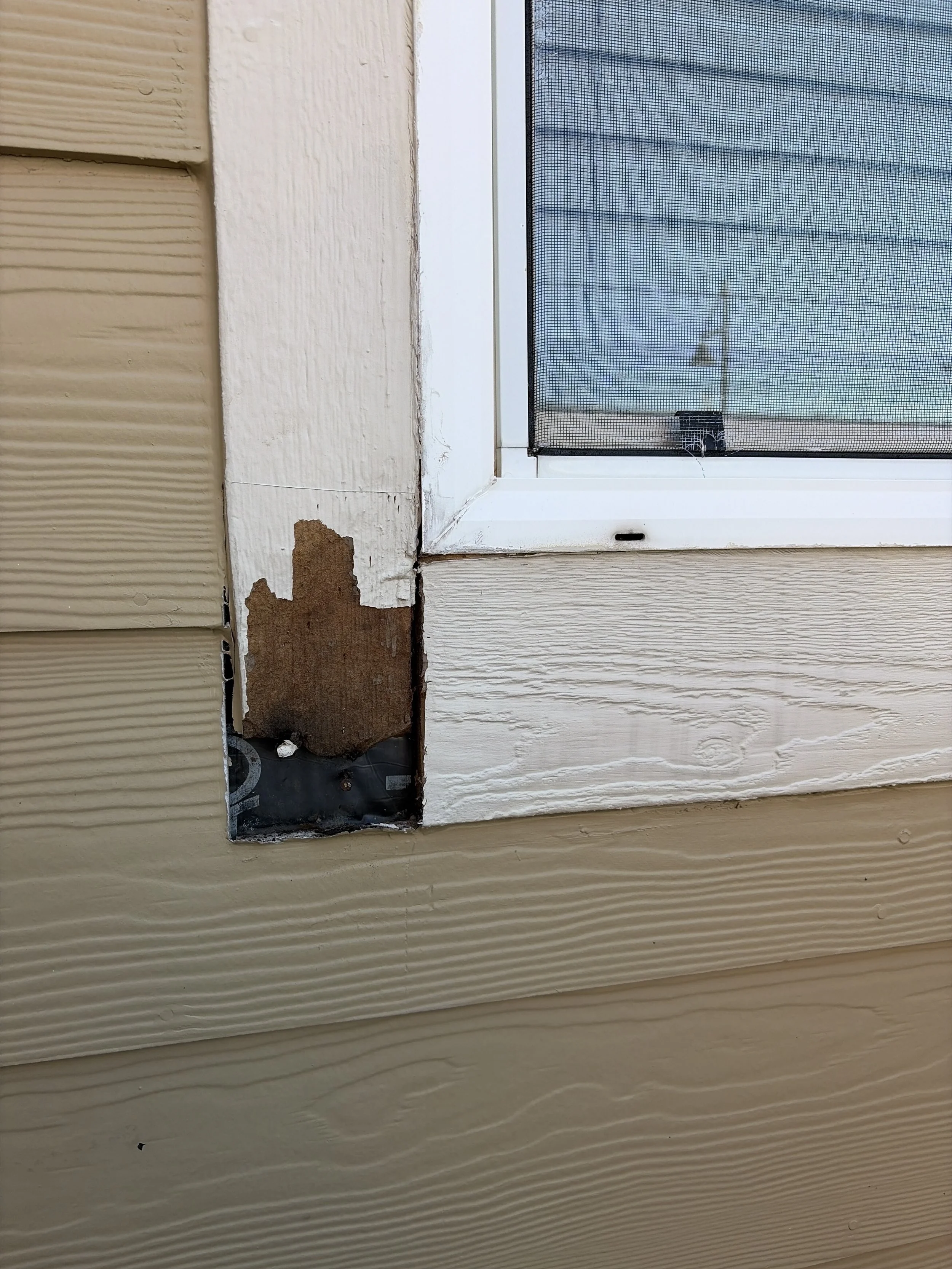
As long as the paint and caulk keep water out, fiberboard does fine. Once water gets in, the material swells, delaminates, and breaks down into something closer to wet cardboard than wood.
The damage showed up right where the failed caulk let water in:
Along the vertical jamb trim, where the gap at the window frame fed water straight into the board
At the lower corners, where the side trim meets the sill and water collects
At the bottom ends of the trim, which soaked up water and wicked it upward
By the time I got there, parts of the trim were soft and crumbly enough to pull apart by hand, and the flashing tape behind it was showing at the corner.
Why It Matters: Trim Is Your First Line of Defense
Exterior trim isn't just decoration. It's part of the system that sheds water away from the window opening. When trim rots, the water that used to run off has a direct path toward your sheathing, framing, and the window itself.
A trim repair today is a small job. Left alone, the same leak can turn into a sheathing or framing repair, which is a much bigger (and more expensive) conversation.
The Fix: Wood Trim, Sealed, Caulked, and Painted to Match
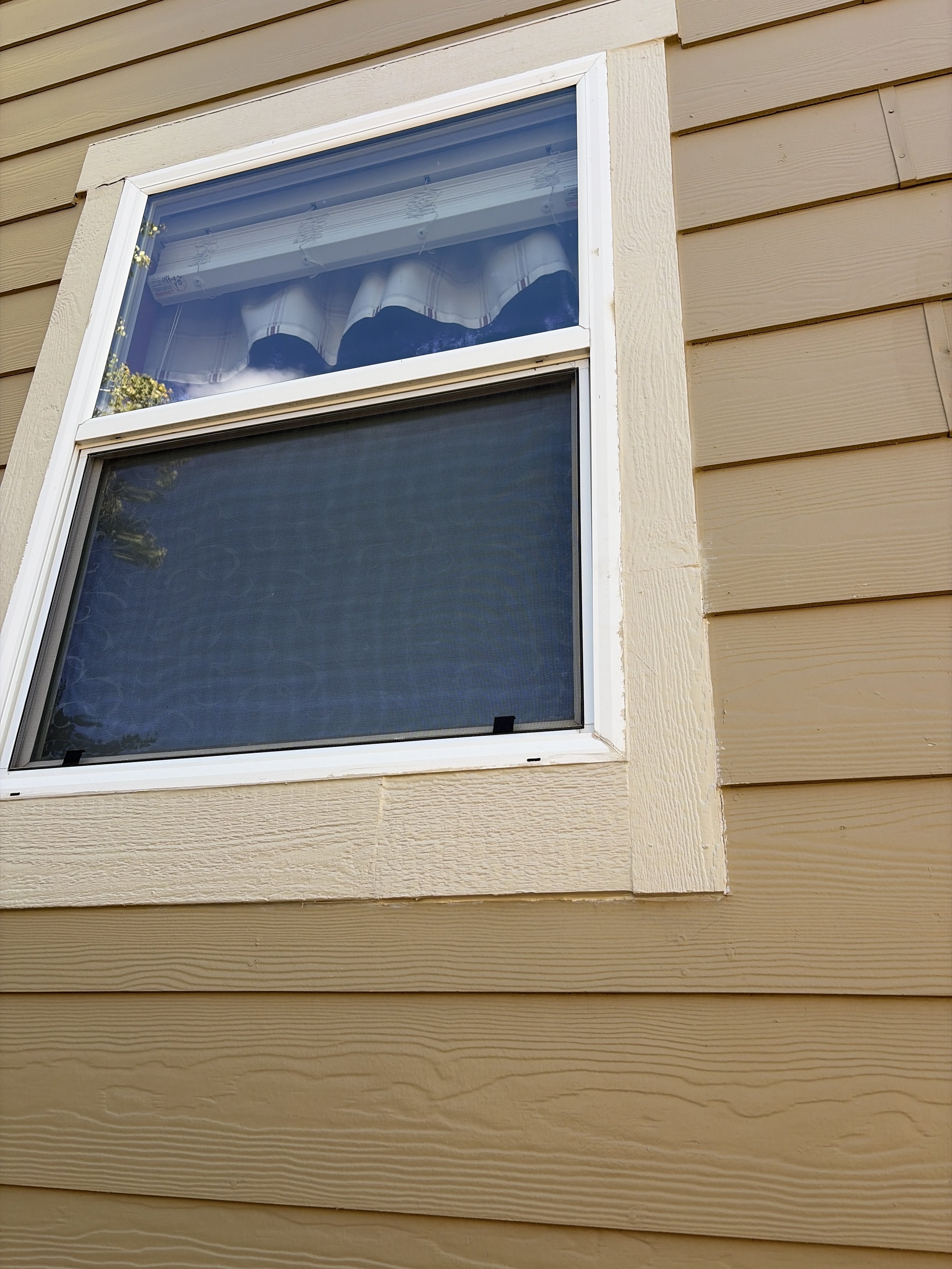
New wood window trim, sealed, caulked and painted to match the existing trim after rot repair.
The homeowner's goal was simple: when it's done, it should paint up and look identical to the rest of the house. Here's how I got there:
Removed the damaged fiberboard. All the soft, swollen, and delaminated material came out.
Cut new wood trim to match. I sized the replacement pieces to the existing trim profile and width so each window reads as one clean, consistent frame.
Sealed the new trim and re-caulked the joints. Replacing the board without fixing the failed caulk line would just restart the clock. Fresh caulk at the trim-to-window joints closes the gap that caused the problem in the first place.
Painted to match. Look at the after photos. You'd never guess these corners were falling apart a few weeks earlier.
Warning Signs to Check on Your Own Windows
Grab a coffee and take a lap around your house. Look closely at the caulk lines and bottom corners of each window and door:
Caulk that's cracked, shrunken, or pulling away from the window frame
Paint that's peeling, bubbling, or cracked
Trim that looks swollen or puffy compared to the rest of the board
Soft spots. Press gently with a thumb or screwdriver tip; healthy trim shouldn't give
Dark staining or fuzzy, fibrous texture where paint has worn through
Caught at the caulk stage, this is a quick fix. Caught at the crumbling-trim stage, it's a repair.
Why Fall Is the Right Time
Late fall is the last good window for exterior repairs on the Front Range. Once winter hits, water that's already in damaged trim freezes, expands, and accelerates the breakdown. Freeze-thaw swings can do months of damage in a few weeks. Fixing trim and caulk now means you go into winter sealed up instead of hoping it holds until spring.
Frequently Asked Questions
How often should exterior window caulk be replaced? There's no fixed schedule. Check it every year or two, especially on sun-facing sides. When it's cracked, shrunken, or pulling away, it's time.
Can rotted fiberboard trim be patched instead of replaced? Small surface damage can sometimes be filled, but once fiberboard has swollen or delaminated, it doesn't recover. Patching over swollen material usually fails quickly. Replacement is the reliable fix.
Why use wood instead of fiberboard, PVC, or fiber cement? On this job, the homeowner wanted the repaired trim to paint and look identical to the existing trim. Wood trim cut to the same profile, sealed and painted, gives a seamless match. The right material depends on your house and your goals, and I'm happy to talk through the options.
How long does a window trim rot repair take? A few windows like these are typically a straightforward job. Hidden damage behind the trim can extend the timeline, which is why I check what's underneath once the old trim comes off.
Need Window Trim Repair?
I'm Jeremy, owner and sole operator of Old Town Handyman & Home Solutions. I handle exterior trim repair, caulking, carpentry, and general home repairs for homeowners in Lafayette, Louisville, Longmont, Superior, Broomfield, Erie, and Boulder. When you book with me, I'm the one who shows up and does the work.
If you've got failing caulk, soft trim, or peeling corners, let's get it fixed before winter does more damage.
👉 Book a repair at oldtownfixit.com/contact-hcp
Making your TO-DO list a DONE list.